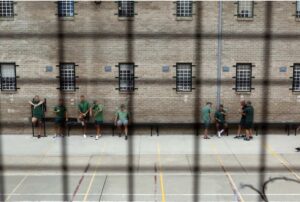
One of the biggest challenges of prison life is boredom.
In a world where most of us deal with boredom instantly, by pulling out our phones and scrolling
through news, social media, TikToks, games, or YouTube, prison feels like time travel back to the early 90s. No mobile phones. Free-to-air TV only. Flicking through a printed TV guide in the newspaper to see what’s on.
Apart from mandatory programs, gym sessions, walking laps around the yard, and watching TV, there really isn’t much to do. Each day follows the same rhythm: inmates are locked into their cells at a set time each afternoon and let out again the next morning.
Recently, there was a proposal to push the afternoon lock-in time later. The idea was simple: more time outside cells, more fresh air, opportunities for socialising, and maybe even watching the sun go down. You’d expect inmates to welcome that.
But the response was unanimous: they wanted to be locked in earlier.
The reason?
“It makes the day quicker.”
“It’s another day ticked off the list.”
Some said it was better to be locked in early so they could just sleep and make time pass faster.
Boredom had become so unbearable that they preferred to escape it altogether.
Not long ago, an inmate told me I have the “easiest job in the world.” According to him, “Chappy
comes into the yard, kicks back with the boys, and that’s it.”
In some ways, he’s not wrong.
Most of my days as a prison chaplain are spent going out into the yard or cell blocks and, quite
literally, doing nothing. Sometimes that means standing in one spot for hours, talking, or not talking, with inmates, sharing their boredom.
Some of you might know that I often describe much of my day-to-day role as a prison chaplain as “going out and doing nothing”. But I’ve come to realise that while doing nothing sounds empty, the real value is in the words going out.
There is something deeply meaningful about choosing to go out into the yard and be with inmates. Even when nothing seems to be happening, a lot is happening. This is the ministry of presence.
Prison chaplaincy is long-term, cross-cultural work. Trust isn’t built through programs or quick conversations. Sometimes it takes weeks or months of simply showing up, going out and doing nothing, before real relationships form.
And because we’re human, silence rarely stays silent for long. Boredom turns into conversation. Conversation turns into honesty. And slowly, opportunities to share hope, and the gospel, begin to appear.
Whenever I stand in the yard sharing in the boredom and restlessness of prison life, I’m reminded of Ecclesiastes 3:11:
“He has made everything beautiful in its time. He has also set eternity in the human heart;
yet no one can fathom what God has done from beginning to end.”
Boredom exposes something deeper. It reveals a God-given longing for more. Even those standing around with nothing to do are carrying eternity in their hearts, made for purpose, meaning, and relationship with God.
That’s why boredom doesn’t have to be empty. In fact, it can become a doorway.